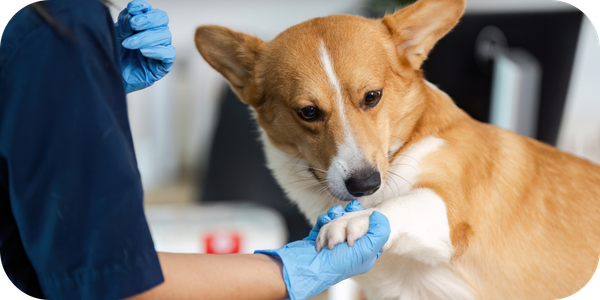
To proactively monitor your pet’s health, it’s recommended that they undergo a full health check at least every 12 months. If they’re a senior (which is 7-8+ years in larger dogs, and 9-10+ years plus in smaller dogs and cats), they should ideally be checked every 6 months.
During routine checks, we often pick up issues such as dental disease, lumps, arthritis and heart murmurs, allowing us to offer more timely treatment to support your pet’s overall health and comfort. However, we can also offer routine blood tests, urine tests, and blood pressure checks to help detect those more invisible internal health issues – just like in people!
Here are a few “hidden” health issues that we commonly detect with routine diagnostic testing.
Chronic kidney disease
Chronic kidney disease (CKD) is relatively common in senior pets, particularly in cats, affecting up to 40% of cats over the age of 10 and 80% of cats over the age of 15.
In the earlier stages of CKD, affected pets will usually show no obvious outward symptoms. However, they will start to show telltale changes on routine blood and urine tests.
Early detection of CKD allows us to start supportive treatment earlier, which can slow progression of the disease and keep pets feeling well for longer.
Hypertension
Hypertension (high blood pressure) in pets usually occurs secondary to other health issues, such as kidney disease or hormonal imbalances (e.g. Cushing’s disease and hyperthyroidism), so is more common in middle-aged to older pets.
Unfortunately, without blood pressure checks, hypertension can fly under the radar until it potentially causes irreversible damage to your pet’s eyes, heart and kidneys.
Liver disease
While some cases of liver disease come on rapidly (e.g. after exposure to a toxin), other cases can simmer away gradually; a condition known as chronic hepatitis. This can lead to gradual liver scarring and reduced liver cell function.
Routine blood tests can help pick up liver parameter elevations in the earlier stages of disease, allowing us to investigate the underlying cause and treat your pet sooner.
To discuss options for proactive health monitoring in your pet, contact our helpful team.