
Did you know that heart disease in cats tends to present quite differently from that in dogs?
The most common canine heart disease (myxomatous mitral valve disease or MMVD, i.e. a leaky heart valve) tends to be reasonably straightforward to diagnose, as affected dogs will usually:
- Develop a heart murmur (an abnormal heart sound that can be heard with a stethoscope)
- From the moderate stages, start to show “classic” symptoms of heart disease, such as coughing or reduced exercise tolerance
- From the moderate stages, they start to show changes in their heart shape and size on chest x-rays
In cats, the most common heart disease is hypertrophic cardiomyopathy (HCM), which involves progressive thickening of the heart wall muscle, so that the heart becomes less and less able to effectively fill with blood.
Unfortunately, HCM can be a little trickier to diagnose. This is because:
- Listening to a cat’s heart with a stethoscope is not a sensitive tool for diagnosing heart disease, as up to 70% of cats with an audible heart murmur have an “innocent” murmur (i.e. a murmur that is not a sign of actual disease), and some cats with HCM may not have a murmur at all!
- Cats almost never cough with heart disease
- Many cats with heart disease will not show any obvious symptoms until they become severely affected, when they may suddenly develop breathing difficulties or other unwellness related to the formation of blood clots around their body
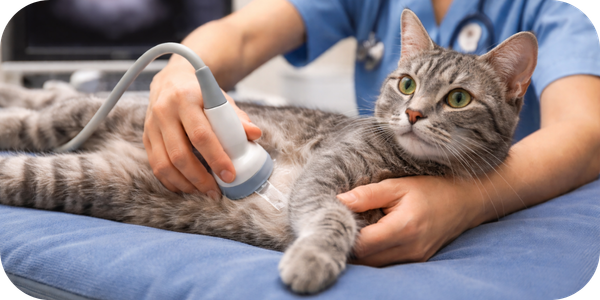
For this reason, it’s recommended that any cat showing abnormal breathing (such as an increase in their resting breathing rate of more than 35 breaths per minute) undergo an urgent veterinary assessment. Depending on their specific case, they may be recommended to undergo blood tests, chest x-rays, or a potential referral for echocardiography (heart ultrasound).
If you have a feline friend with a breed-related predisposition to heart disease, such as a Maine Coon, British Shorthair, Ragdoll or Sphynx, have a chat with our veterinary team about options for heart health monitoring.