
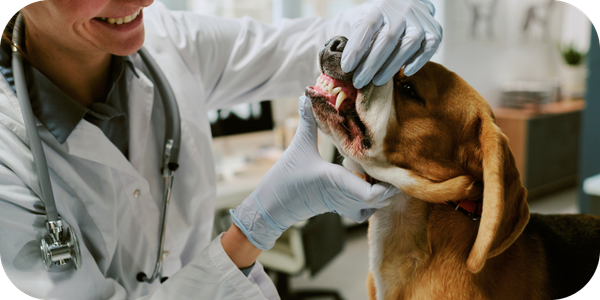
Did you know that your pet’s gums provide an indication of their overall hydration and cardiovascular health?
Here’s the “How To”, and what any abnormal findings could mean.
How to check your pet’s gums
To check your pet’s gums, gently lift their upper lip in the region of their whiskers, so you can see the gum area just above their upper canine tooth.
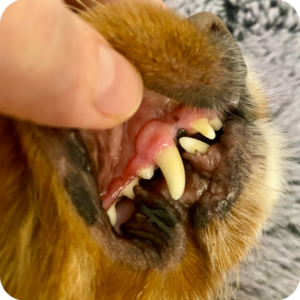
You can then check:
Gum colour
- Normal dog gum colour ranges from bubblegum pink to salmon pink
- Normal cat gum colour is usually salmon pink to pale pink.
- Some pets also have areas of dark grey-black pigmentation – provided this pigmentation is flat and smooth, it’s likely normal.
- Pale/white gums can indicate:
- Reduced blood flow (which can be due to issues such as severe dehydration, heart disease, or blood loss)
- Reduced red blood cell levels (anaemia)
Gum moistness
- Healthy gums will usually feel moist and slippery.
- Tacky (sticky) or dry gums could indicate that your pet is dehydrated.
- Gums coated with lots of saliva could indicate that your pet has just eaten or drunk, or is feeling nauseous (which causes them to drool more).
Capillary refill time (CRT)
- You can check your pet’s CRT by gently pressing their gum to make a small area blanch (turn white). The CRT is the number of seconds it takes the blanched area to return to its previous colour (usually 1-2 seconds).
- A CRT less than 1 second can indicate inflammation or early shock, whereas a CRT more than 2 seconds can indicate reduced blood flow.
If you have any concerns about your pet’s general health, contact our health-conscious team.