
Is your dog just highly-strung? Or are they suffering from anxiety?
Here’s an overview of anxiety in dogs, including potential causes and symptoms to monitor for.
Is my pet just highly-strung, or are they anxious?
Just like people, some dogs are naturally more highly-strung than others, which can manifest as them being “jumpier” about unexpected noises or handling.
Anxious dogs show more significant stress, which may be specific to a certain situation (such as vet visits or grooming), or more generalised (e.g. triggered by any new person or unfamiliar situation). In these cases, rather than just getting a bit startled and then recovering and being fine, there is a more significant impact on the pet’s mental state.
Why do some dogs develop anxiety?
Some pets have a genetic predisposition to being anxious, with the offspring of anxious parents being more likely to show this issue themselves. However, anxiety in dogs can also develop due to either actual negative or traumatic experiences, or simply a lack of positive experiences to help build their confidence during their “critical socialisation period” (from about 3 weeks to 16 weeks of age).
Many owners report that their pet didn’t seem as anxious as a puppy or kitten, and the issue seemed to worsen later on. This can be because anxiety can become more pronounced as a pet mentally matures (which usually occurs at around 1-3 years of age).
What symptoms will anxious pets show?
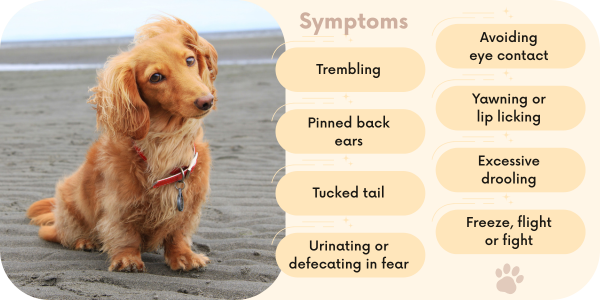
When exposed to their particular anxiety trigger, affected dogs may show symptoms including:
- Trembling
- Avoiding direct eye contact
- Excessive drooling
- Pinned back ears
- Yawning or lip licking
- A tucked tail
- Urinating or defecating in fear
- A freeze, flight or fight reflex (i.e. becoming very still and tense, trying to escape the perceived threat, or trying to drive the threat away with aggressive behaviours such as growling or snapping)
If you notice your dog demonstrating these symptoms in routine situations where you’d want them to be OK (e.g. nail clips or visits from family), it’s a good idea to seek help from our veterinary team.