
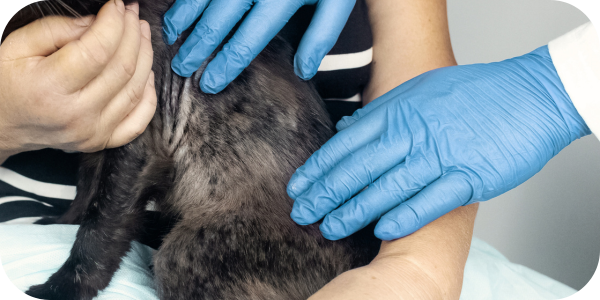
Unless your cat is a hairless breed like a Sphynx, it’s not normal for them to have bald spots!
Here’s what can cause excessive hair loss in cats, and how we can get the drop on whatever’s causing their issue.
What are some common causes of bald patches in cats?
If your cat is developing bald spots, it’s most likely due to an issue that is causing their hair to fall out excessively, or something that is triggering them to overgroom themselves. Normal shedding should not lead to bald patches (even though it may look as though you could construct another cat out of all the fur your pet drops!)
Cats can lose patches of hair secondary to problems that cause significant skin inflammation, such as bacterial infections, fungal infections (such as ringworm), and tumours affecting the skin.
More commonly, cats are triggered to overgroom themselves (breaking off or pulling out patches of hair in the process) due to:
- Itchy skin problems such as flea allergy dermatitis (an allergy to flea bites), environmental allergies or food allergies
- Behavioural problems, including anxiety or obsessive-compulsive disorders
How can we diagnose what is causing a cat’s skin problem?
We can often prioritise a list of the most likely causes based on a cat’s history and initial physical examination. For example, a cat who is not on an effective flea prevention routine and has scabby bald patches around their bottom and head is most likely to have flea allergy dermatitis!
However, in some cases, we may need to recommend further testing to clarify the cause of a cat’s skin problem. This may include:
- A hypoallergenic dietary trial
- Microscopic assessment of skin scrapings or hair samples
- Skin biopsies
If your pet develops any unusual skin lesions, bald patches or lumps, we’d recommend getting the skinny from our knowledgeable veterinary team!