
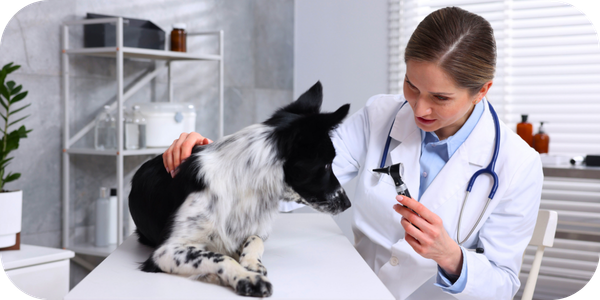
Recurrent ear infection issues can be very frustrating for owners to manage, let alone painful for the poor pet. But don’t worry, there’s more that we can offer for long-term relief!
The first step for managing problematic ears is treating any active infection. Once your pet’s ears get the “all-clear”, our vets can then implement longer-term management options, such as:
-
Hypoallergenic dietary trials
In many cases, recurrent ear infections have an underlying allergic trigger, one of which could be a food allergy – a developed allergy to particular proteins.
As part of an allergy assessment for your pet, we will often recommend starting with a strict, veterinary-supervised hypoallergenic dietary trial, to see if eliminating the proteins that your pet has previously been eating leads to an improvement.
-
Medical management
If your pet doesn’t improve with a hypoallergenic dietary trial, we will then consider potential atopy – an allergy to certain airborne particles, such as tree or grass pollens, mould spores or dust mites.
Management of atopy can involve either long-term medications to help control your pet’s inflammatory responses, or referral to a specialist dermatologist for potential immunotherapy (allergy “vaccines” to eventually help reduce your pet’s allergic response).
-
Flushing under general anaesthetic
Chronically or severely irritated ears can become clogged with discharge. If not cleared, this debris can prevent topical ear treatments from working effectively.
In some cases, we may recommend a procedure under anaesthesia to properly clean out your pet’s ears and check their eardrums for infection-related damage.
-
Surgical treatment
Ear canals that have become irreparably damaged, thickened and blocked due to recurrent infections may sometimes require surgery to open them up again, so they can aerate properly.
If your pet suffers from frequent ear problems, please reach out to our vets for long-term solutions.