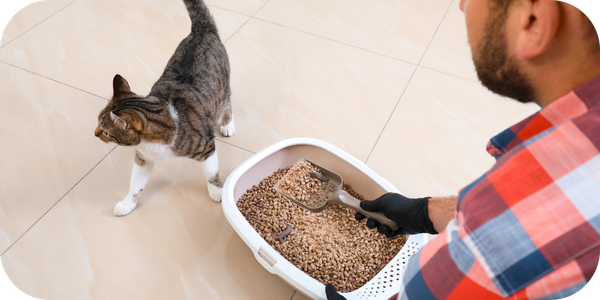
Do you know why pregnant women are sometimes advised against cleaning out cat litter trays?
It’s because cats can be a potential source of Toxoplasma infection, a disease which can pose a risk to people. However, there is a lot of misunderstanding around this disease, so let’s clarify some of the facts.
What is toxoplasmosis?
Toxoplasmosis is the infectious disease caused by a parasite called Toxoplasma gondii. It rarely causes sickness in healthy cats, but may cause illness in kittens or cats with reduced immunity due to diseases such as FIV or FeLV.
In people with normal immunity, toxoplasmosis usually causes no obvious issues or mild, flu-like symptoms. However, in people with reduced immunity, such as pregnant people, babies, and immunosuppressed people (e.g. people undergoing chemotherapy), toxoplasmosis can cause significant illness.
What causes toxoplasmosis?
If a cat eats toxoplasmosis-infected wildlife or raw meat, they will temporarily shed oocysts (parasite eggs) in their poo for up to two weeks. Once the oocysts are pooed out, they require 1-5 days (depending on environmental conditions) to become actively infectious. If an owner cleans out a litter tray containing infectious oocysts without using proper hygiene practices, they can potentially transfer oocysts into their mouth and become infected.
However, it’s important to note that most human Toxoplasma infections occur when people eat undercooked, contaminated meat, fruit or vegetables, play in contaminated sandpits, or garden in contaminated soil without wearing gloves or washing their hands afterwards.
“I have a cat – what should I do to reduce my risk of infection from their poo?”
If you have a cat, ensure you scoop faeces out of their tray daily (wearing gloves and washing your hands afterwards), and scrub out your cat’s tray 1-2 times weekly with boiling water and a cat-safe detergent. It’s also safest not to feed your cat a raw diet. Cats do not usually carry the parasite on their fur, so it’s rare for a human to become infected from general interactions.
It’s also recommended to have a chat with your health professional to assess and minimise your personal risk, particularly if you are planning to become pregnant or are otherwise immunocompromised.
For more information on infectious disease safety with pets, consult our knowledgeable team.