
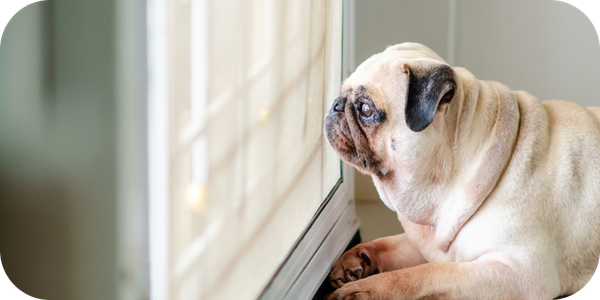
Leaving for a holiday soon but leaving your pet behind? For some pets, the prolonged absence of their favourite human can be hard to understand. If your pet is likely to be anxious in your absence, it can help to have a plan in place to make your time apart a little easier for them.
Recognising the signs
Signs your pet may have separation anxiety include:
- vocalising
- pacing and restlessness
- destructive behaviour
- decreased appetite
- toileting accidents
Prepare before you leave
Do you have a velcro dog who isn’t accustomed to being left alone? If personal space isn’t in your pet’s vocabulary, it can help to start practising short periods apart before you leave. Give your pet a special toy or treat and avoid making a fuss over them as you leave. Gradually increase the duration if your pet appears comfortable.
Keep their routine familiar
Whether your pet is staying with a pet sitter or being cared for in their own home, keeping their routine as familiar as possible can help them feel more settled. It can also help to leave your pet’s items with them, such as bedding and toys, so they feel more at home in an unfamiliar environment.
When to get help
If your pet’s separation anxiety is more than just some sad eyes waiting by the door, don’t wait until you’re packing your suitcase to make a plan. Reach out to our veterinary team early for advice on managing your pet’s separation anxiety. In some cases, prescription medication may be recommended to help manage your pet’s anxiety and make your time apart more manageable for them.