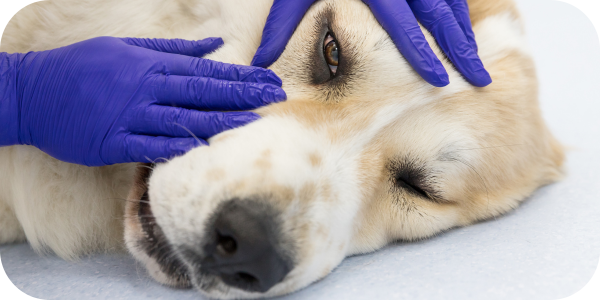
It’s always good “eye-dea” to keep an eye on your pet’s eyes for any unusual changes, but it’s especially important in senior pets! Mature pets often develop a few benign (harmless) eye changes, but they are also at a higher risk of some problematic conditions.
Here’s what to look for, and when it’s safest to have your pet assessed by our vets.
Sunken eyes
Older pets can gradually develop a more sunken appearance to their eyes, i.e. their eyeballs sitting deeper back within the sockets. This is often due to the age-related loss of fatty tissue behind their eyeballs.
However, sudden eyeball positional changes can also occur due to conditions such as:
- Moderate to severe dehydration
- A nerve problem called Horner’s disease, which can occur randomly in some cases, or may be triggered by other conditions such as middle/inner ear problems or trauma to the neck
- Reflex retraction of the eyeball (i.e. the eyeball being pulled into the eye socket) due to painful eye conditions, such as eye ulcers or foreign bodies
Cloudy eyes
Senior pets frequently develop a bluish-grey cloudiness of the lenses within their eyes, due to a degenerative change known as lenticular sclerosis. This doesn’t require treatment but may slightly reduce their near vision or depth perception.
However, dogs and cats may also develop cloudy eyes due to:
- Cataracts, which can develop secondary to conditions such as diabetes, and often trigger other problematic eye conditions such as uveitis (eyeball inflammation)
- Glaucoma (a sudden increase in eyeball pressure, which can cause severe pain and permanent blindness)
- Pigmentary keratitis (the formation of brown/black pigment on the usually clear surface of the eyeball, due to chronic irritation from conditions such as dry eye)
The bottom line? If your pet’s eyes suddenly look different, it’s always safest to have our vets take a look! It could spare your pet a lot of discomfort and may even save their vision!