
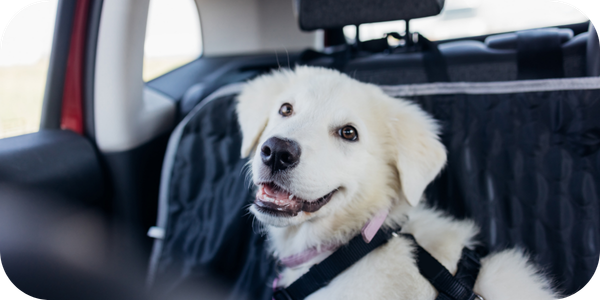
When it comes to car travel with pets, every pet parent has their own story – from the dog who loves the car, to the cat who meows the whole drive, or the drooly dog who gets carsick.
With the holidays just around the corner, here are some practical tips for easier car journeys with your pet, and when it’s best to see one of our vets for some extra support.
Making the journey easier
For the anxious or new pet passenger, try to get them used to the car first by introducing it as a positive experience. Let your pet sit in a parked car – dogs in their secure car harness, cats in a secure carrier (+/- a towel over the carrier to help reduce visual stimulation) – and positively reinforce the experience with their favourite toy or treat. Build upon this experience with short drives as your pet appears more comfortable. If your pet remains anxious, speak to one of our vets about options for vet-approved calming medications.
Is your pet carsick?
Does your pet seem a little off during road trips? Just like humans, our pets can also suffer from motion sickness in the car. As they can’t tell us how they’re feeling, try to monitor your pet for potential symptoms of nausea, such as:
- Lip smacking/licking
- Drooling
- Restlessness
- Whining
- Frequent yawning
- Lethargy
- Vomiting
Thankfully, a predisposition towards car sickness doesn’t have to rule out road trips for your pet! Try withholding food from them for 2-3 hours prior to car travel, as travelling on an empty tummy may resolve the issue. If their motion sickness persists, have a chat with our vets about prescription anti-nausea medication options to make the journey more comfortable for your pet.
With a little preparation, you and your pet will both be ready to hit the road for the howl-idays!