
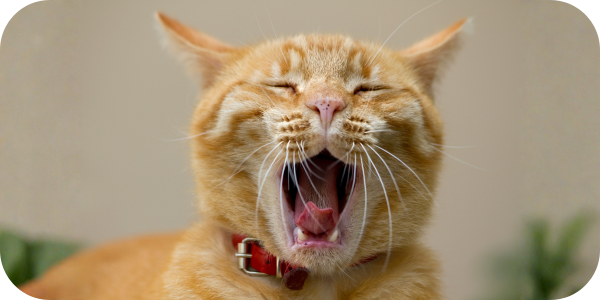
While most cases of bad breath in cats are secondary to dental disease, there are other health issues that can cause unpleasant oral odours too.
Here’s a run-down of some of the more common reasons for whiffy breath in our feline friends.
1. Dental disease
Dental disease is extremely common in cats, with between 50 and 90% of cats four years old and older suffering from some form of it.
Early dental disease starts with gingivitis (gum inflammation) which is reversible with prompt dental treatment. More advanced dental disease involves a progression to periodontitis, where inflammation and infection cause permanent damage to the tissues that attach the affected teeth to the jaws.
2. Kidney disease
Chronic kidney disease affects up to 40% of cats over the age of ten. In advanced kidney disease, the build-up of waste products in the blood can cause oral odours due to the development of mouth ulcers (which can become infected) and the release of ammonia on the breath.
3. Oral masses
Oral tumours can develop on the gums or the palate, and unfortunately in cats will tend to invade the surrounding tissues. Early detection leads to better outcomes for affected pets.
4. Gingivostomatitis
This is an extreme form of oral inflammation that affects the gums, the back of the throat and under the tongue. Unfortunately, it is a chronic condition and very painful for affected cats, so requires intensive treatment with multiple extractions and sometimes also longer-term medical therapy.
5. Diabetes
Diabetic cats who are poorly controlled or become unwell can develop elevated levels of ketones (an emergency energy source made from fat) in their bodies. This causes a distinctive acetone smell on their breath.
The good news is that you can help prevent serious issues in your cat with:
- Regular health checks every 12 months for cats up to 8 years old and then every 6 months for older cats
- Prompt rechecks if ever you notice a bad smell from your cat’s mouth, or any other symptoms of unwellness