
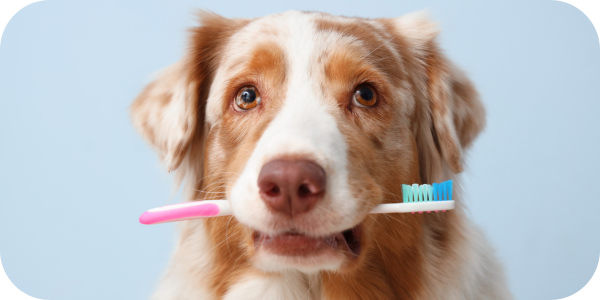
Myth: It’s not that important for dogs and cats to have clean teeth.
Here’s more information about dental hygiene in dogs and cats, and why it’s best for your pet’s quality of life and general health to have a solid dental hygiene maintenance routine in place early on.
What is dental disease, and why is it important to prevent it?
Dental disease is caused by the gradual build-up of plaque and tartar on your pet’s teeth, which traps bacteria around the gumline and tooth roots, triggering inflammation.
Early dental disease appears as reversible gingivitis (gum inflammation), but if left untreated, will progress to periodontitis. Periodontitis involves more significant inflammation and infection that cause pain, and damages the tooth roots, their attachments within the jaw, and the jaw bones themselves. Bacteria from an infected mouth can also enter the bloodstream and affect the health of other organs such as the heart.
What symptoms does dental disease cause?
The most common sign of dental disease that owners note is bad breath. However, if the pet’s mouth is examined, other symptoms will be seen which (depending on their stage of dental disease) can include:
- Gum redness
- Whitish gooey film (plaque) or hardened brown deposits (tartar) on teeth
- Cloudy, smelly saliva
- Bleeding or ulcerated areas of gum
- Exposure of tooth roots
- Loose teeth
How can significant dental disease be prevented?
You can help to maintain good dental health and comfort in your pet with:
- Daily dental hygiene measures – for personalised advice on easy and effective options for your pet, consult our friendly vets!
- Regular dental health checks – at least once yearly for pets up to 8 years old, and then ideally every 6 months thereafter.
- As much as is possible, booking your pet for dental cleaning procedures when recommended by our diligent vets.
For more information, please don’t hesitate to reach out to our team.