
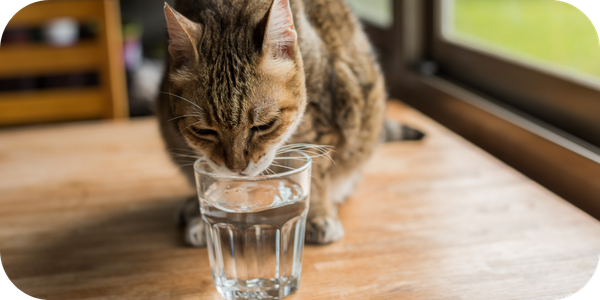
“You can lead a cat to water, but you can’t make it drink”
While we know that’s not the actual saying, it does ring true for many of our feline friends! This is because the ancestors of domestic cats were desert dwellers, obtaining most of their water from eating small prey. (Healthy) Domestic cats therefore retain a low thirst drive and tend to produce very concentrated urine as a way of conserving water.
Some of our feline friends, however, benefit from additional water intake, so may need some extra encouragement. Here’s a bit more on feline hydration.
Which cats may need encouragement to drink more?
As well as cats eating completely dry food (kibble) diets, cats with certain health problems may also benefit from encouraging increased water consumption. These include:
- Cats with a predisposition to cystitis (bladder inflammation)
- Cats with a history of forming bladder crystals/stones
- Cats requiring NSAIDs (non-steroidal anti-inflammatory drugs) for relief of short- or long-term pain
- Cats prone to constipation
How can cats be encouraged to drink more?
Owners can gradually make dietary or environmental adjustments to help encourage their cat to consume more water.
Depending on your cat’s preferences and their particular issue, options include:
- A transition to a partially or fully wet food diet
- Offering water in a shallow, wide bowl, with many cats preferring those made of glass or ceramic
- Setting up a feline water fountain
- Having one water bowl per cat in the household, plus one spare (to reduce competition), and ensuring there is one bowl per house level in multi-storey homes
- Trialling different water options, such as rainwater collected in an outdoor bowl or filtered water
- Offering liquid treats such as:
- Commercial lickable treats or cat “soups”
- The water drained from a springwater tuna can
- Meat broths (provided they contain no added onion or salt)
If you have noticed any changes in your cat’s thirst levels or urine quality, consult our hydration-helpful team for more advice.