
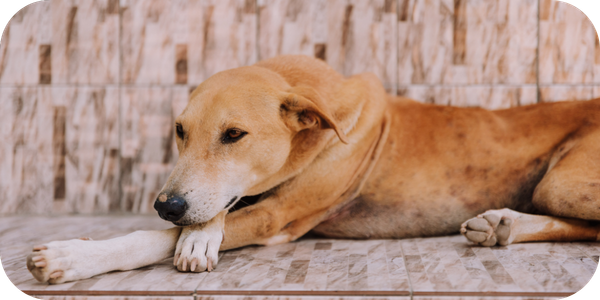
Does your dog have patches of thickened, hairless skin on their elbows? And if so, are they an issue?
Here’s more information on elbow calluses in dogs, and when they might require a vet check.
What are calluses?
Calluses are areas of skin thickening that form as a protective response to frequent pressure or friction. They are commonly seen on larger breed dogs who lie on hard surfaces, and frequently form on bony, unpadded areas such as the elbows, hocks (ankles), and hips.
Calluses appear as thick, hairless patches of skin that are often greyish and wrinkled in appearance, so they can look a little like elephant hide!
Do calluses require treatment?
In most cases, calluses are a cosmetic issue only and require no treatment. Dogs should always be given access to soft, clean, supportive bedding (even if they then choose not to lie on it!), particularly if they have any known joint pain issues.
If your dog’s calluses appear very dry and rough, you can try regularly applying a pet-safe moisturising balm or petroleum jelly to help prevent them from cracking and becoming infected.
Should I get my dog’s calluses checked?
Overweight or less mobile dogs can be prone to developing problematic pressure sores due to increased pressure, while overly thin pets can also be at risk of these due to a lack of natural padding. Additionally, dogs with sensitive skin or very short, bristly hairs can also develop problematic skin issues that can mimic calluses, such as hot spots (acute skin inflammation) or folliculitis (deep skin inflammation/infection).
It’s recommended to have your dog’s calluses checked if:
- They are causing any irritation to your pet
- They become red, raw, or oozy
- They become swollen
- They appear to be growing or spreading to other areas
For an experienced assessment of your pet’s skin health, book an appointment with one of our friendly vets.